
What Is Fact?
The Way Things Really Are

An Invitation to a Christian Philosophy of Meaning

Part 1: What is Fact?
Part 2: What is Truth?
Part 3: What is Knowledge?
Part 4: What is Faith?

Motivated Thinking
One of the most confusing things for a lot of folks is the difference between fact and truth. Hold on! Aren’t facts and truth the same thing? No, they’re not. Indeed, mistaking one for the other is a root cause of many of the world’s present confusions.
I remember a day when I was hard at work trying to understand some elusive scrap of philosophy. My son Ethan walked into the room and asked: “Dad, what was the highest mountain in the world before we discovered Mount Everest?”
I love being asked questions like this. Because I really love showing off my talent for useless trivia for my wife and kids. But this time my selfish motivations joined forces with the clever way Ethan asked the question. These variables conspired together to defeat my reason.
What happened next?
Well, I have to confess that I set a course for confusion and engaged. I began racking my memory for the highest known mountain in the ancient world. As I was working my way through the continents, and comparing their respective geographies to the Roman and European expansions, Ethan saw my mental gears grinding and grinned.
He had me.
Ethan went dead-pan, and mustering a voice of authority that only teenagers possess, he declared: “Dad, it was Mount Everest.”
I burst into laughter. There I was, the wannabe philosopher “fools-mated” in just two moves by a clever teenager.
There’s an important lesson in this story for all of us. Our desires and assumptions always motivate our thinking. We all approach the world through a set of assumptions that we use to interpret it. We assume things, and our brains take short-cuts based on those assumptions. The riddle is carefully designed to take advantage of these mental shortcuts. More often than not, a riddle will embarrass us for failing to notice something crucial—and all too obvious.
Note this well. Nobody begins by understanding reality objectively. We each perceive the world through our own senses, and then try to make sense of it with our own mind. Likewise, we all form assumptions that may or may not be in accordance with the facts. Working to discover whether our assumptions are warranted or not is an essential first-step to discovering the way things really are.
If we’re not careful, even the educated among us will stumble over their selfish desires and unwarranted assumptions. When they do, they’ll make educated fools of themselves. This happens all the time. It’s important to stay humble and have a sense of humor. I remember enjoying my embarrassment on this rare occasion that my son got the best of me.
I have a prayer ready for times like this:
“Oh Mighty-God…thank you for teaching me humility, again.”
The Category Mistake
I made what philosophers call a category-mistake. I confused one kind of thing for another. We all make this mistake when we confuse fact and truth.
Notice this carefully. Facts are the way things really are. Immanuel Kant referred to this fundamental feature of reality as “things in themselves.”
Facts are the way things really are—whether they have been discovered by a human-being or not. For example, Mount Everest is the tallest mountain on planet Earth. It was before Edmund Hillary ever stood on top of it. Neither did the Earth exchange trigonometry for calculus and curve itself into a sphere when Columbus set off for “India.” Planet Earth is a sphere, and it does not heed the voice of any self-deluded human who thinks otherwise.
Neither did the world leap into motion like a cosmic horse leaving the starting gate when Galileo looked through his telescope and noticed: “it moves.” Planet Earth orbits the sun, and it does not care about the voice of an incorrect religious assumption that held otherwise for over 1,800 years.
Oh! And the thing you identify yourself as right now—that has no power to change what you really are. Because you exist in an objective real-world. You are a fact, whether you accept yourself as one or not.
You see, facts aren’t respecters of persons and their opinions—not even yours. Facts are the way things really are.
Rightly understanding facts may be the most difficult project in all of philosophy.
Of course it is! If it wasn’t, we wouldn’t have anything meaningful to argue about. The search for facts asks preliminary questions like: What is the world? What is a person? What am I? What is my relationship to the world? Does anything exist beyond the world?
You see, facts are the most basic things there are. That’s why they tend to be such stubborn things, especially when we don’t like them.
So, how do we learn about facts?
To know about facts we have to have a relationship to them in which information can be sent, received, and rightly interpreted. There can be no knowledge of the objective world by a subjective knower, unless there is a Bridge between the world as it really is, and the world of our perceptions.
Is there such a Bridge? That’s the big question, isn’t it?
The Undeniable
Learning about facts begins with noticing something you are doing right now. You are thinking. Three preliminary facts can be established from this subjective observation.
Fact 1: You exist. This fact is undeniable, because to deny it you must exist.
Fact 2: Meaning exists. This fact is undeniable, because to meaningfully deny it, Meaning must exist.
Fact 3: Since you are not the eternally perfect Ground of Meaning, there must be a Bridge between things as they really are, and the world of your perceptions. Since you undeniably exist—and Meaning undeniably exists—the reality of the Cosmic-Bridge is also undeniable.
The Universe is a meaningful place. It is an undeniable fact.
Do you need proof?
You are the proof. How’s that for a stubborn fact? Romans 1:20
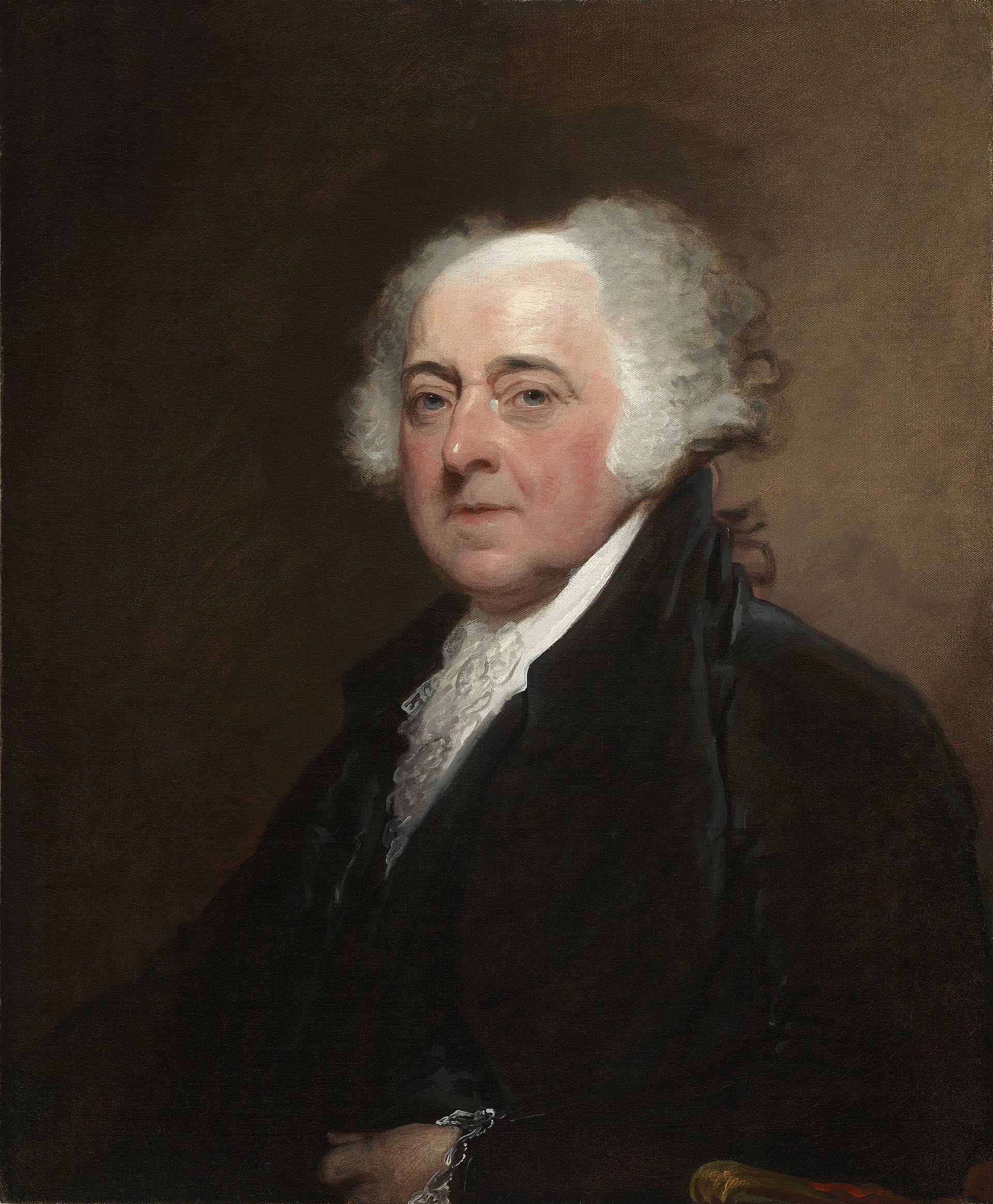
“Facts are stubborn things; and whatever may be our wishes, our inclinations, or the dictates of our passions, they cannot alter the state of facts…”
— John Adams
Next Time: What is Truth?
For more philosophy, theology, and apologetics please visit: